AI R&D evaluations across the three closed labs
OpenAI, Anthropic and Google DeepMind each publish, with every frontier release, a system or model card whose dangerous-capability section reports how far the model is from automating AI research. This site collects those AI R&D scores from the cards alone, with a source and a confidence flag on every number. Use the menu on the left to flip between the labs; each lab page opens with its graphs. How the data were collected and how to read the figures is on the Method and data page.
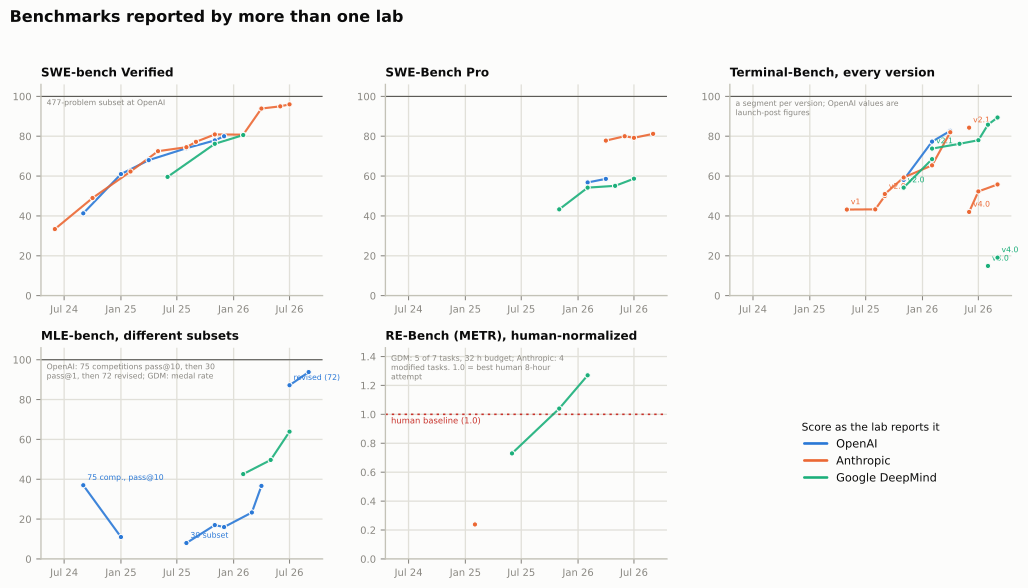
Benchmarks more than one lab reports
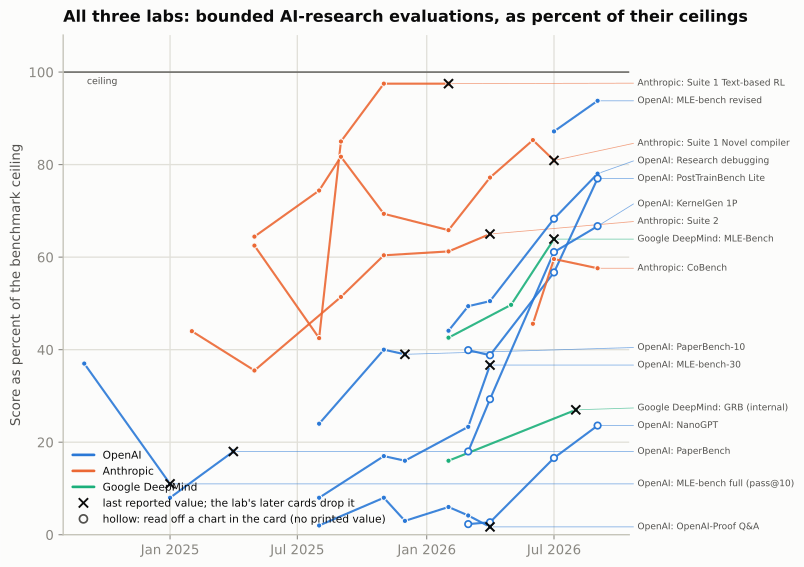
Internal research evaluations, all labs on one axis
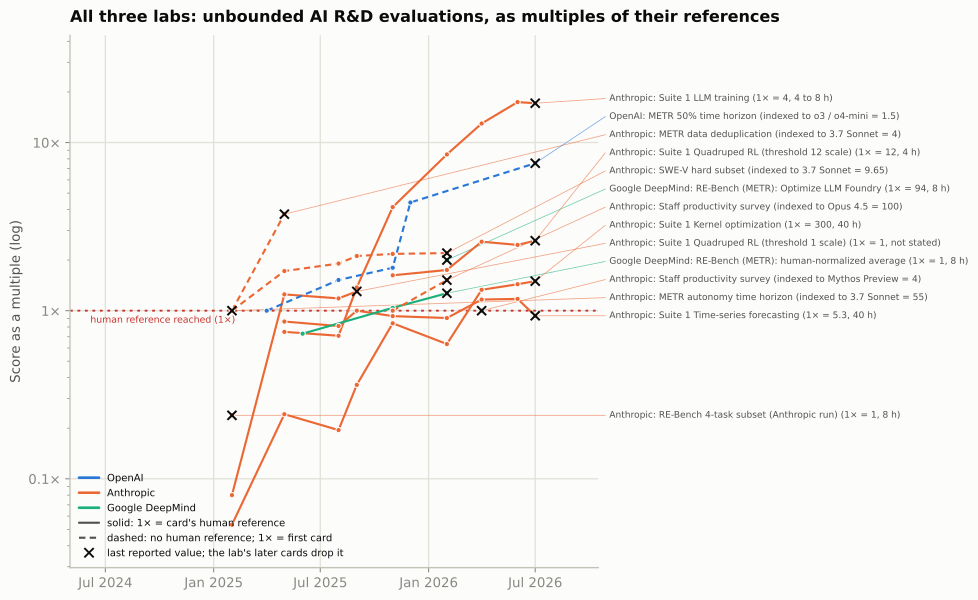
Unbounded evaluations, all labs on one log axis
Reading across the three
Each lab measures a different thing under the AI R&D heading. DeepMind reports a single human-normalized number on a public METR suite, then an internal research-engineering benchmark; OpenAI reports pass rates on internal replication tasks and Kaggle-style competitions; Anthropic reports fractions of a human baseline on internal tasks plus its own RE-Bench subset. SWE-bench Verified is the only benchmark all three report, and even there the subset and scaffold differ. The common thread is qualitative: every lab has moved from “well below human” statements in 2024 to reporting models at or above the human baseline on several-hour ML engineering tasks by 2026, while each still judges the model below its own threshold for autonomous AI R&D. Two things to watch when reading across cards: benchmark versions and subsets change (Terminal-Bench 1 to 2.0, 2.1 and 4.0; MLE-bench full to 30 to revised; RE-Bench 7 tasks to 5), and later cards re-run earlier models and print different numbers, so a single model’s score can differ between its own card and a successor’s comparison table.